Buy ferienpass.eu ?
We are moving the project
ferienpass.eu .
Are you interested in purchasing the domain
ferienpass.eu ?
domain@kv-gmbh.de · 0541-91531010
Buy ferienpass.eu ?
What are the differences between argumentative structure and summary?
The main difference between argumentative structure and summary lies in their purpose and content. Argumentative structure is used to present a clear and logical progression of ideas to support a specific claim or viewpoint. It includes an introduction, body paragraphs with supporting evidence, and a conclusion. On the other hand, a summary is a concise overview of the main points and key details of a text, speech, or event. It does not include the writer's opinion or analysis, but rather focuses on presenting the main ideas in a condensed form. Overall, argumentative structure is used to persuade and convince, while a summary is used to inform and provide an overview. **
What are ideas for leisure activities, outings, and excursions?
Some ideas for leisure activities, outings, and excursions include visiting a local museum or art gallery, going for a hike or nature walk in a nearby park, trying out a new restaurant or cafe, attending a live music or theater performance, or taking a day trip to a nearby town or city. Other options could include going to a sports game, exploring a farmers market, taking a cooking or art class, or simply spending a relaxing day at the beach or by the pool. Ultimately, the best leisure activities will depend on personal interests and preferences. **


Similar search terms for Differences Structure
Top-Angebote
Products related to Differences Structure:
-
A-Street Prints Structure Green Chain Link WallpaperGive décor a mod punch with this energizing wallpaper design. A quatrefoil stripe gives walls the illusion of a stylish chain link design that lends a fresh and contemporary air to your space.99,99 $*Shipping: 0,00 $Secure redirect to the provider
-
Uplift Essentials Molecular Structure Nordic Candle Holder silverAdd a touch of contemporary elegance to your space with the Molecular Structure Nordic Candle Holder, a stunning fusion of scientific inspiration and minimalist design. This silver candlestick centerpiece features a unique geometric framework that...67,97 $*Shipping: 0,00 $Secure redirect to the provider
-
Felt Right Structure Max Neapolitan Sound Dampening Pinnable TilesSometimes, bigger is just…beautiful. Meet Structure, the immersive new design that’s perfect for large spaces. In our take on Neapolitan, we’ve combined soft, inviting colors in an argyle pattern that simply has to be seen to be enjoyed....829,83 $*Shipping: 0,00 $Secure redirect to the provider




-
What are some ideas for leisure activities, outings, and excursions?
Some ideas for leisure activities, outings, and excursions include visiting a local museum or art gallery, going for a hike in a nearby nature reserve, trying out a new restaurant or café, attending a live music or theater performance, or taking a day trip to a nearby town or city. Other options could include going to a farmers' market, exploring a botanical garden, participating in a cooking class, or simply spending a day at the beach or park. The key is to choose activities that interest you and provide a break from your usual routine. **
-
What are the differences in the structure of citric acid and sodium hydroxide?
Citric acid is a weak organic acid with the chemical formula C6H8O7, while sodium hydroxide is an inorganic compound with the chemical formula NaOH. Citric acid is a tricarboxylic acid, meaning it has three carboxylic acid functional groups, while sodium hydroxide is a strong base composed of sodium cations and hydroxide anions. Additionally, citric acid is a small, water-soluble molecule, while sodium hydroxide is a solid at room temperature and highly soluble in water. **
-
What are the similarities and differences in the structure of DNA compared to proteins?
Both DNA and proteins are made up of long chains of building blocks. In DNA, the building blocks are nucleotides, while in proteins, they are amino acids. Both DNA and proteins have a primary structure that determines their sequence of building blocks. However, DNA has a double helix structure, while proteins have a more complex three-dimensional structure determined by interactions between amino acids. **
-
Can someone explain the differences between classes, strata, and milieus in social structure to me?
In social structure, classes refer to groups of people who share similar economic positions and opportunities. Strata, on the other hand, are layers or levels within a society that are based on factors such as income, education, and occupation. Milieus are social environments or settings where individuals interact and share common values, lifestyles, and interests. While classes focus on economic factors, strata consider various social indicators, and milieus emphasize cultural and lifestyle aspects within the social structure. **

What are the differences between the shell model, the cloud model, and the Lewis structure?
The shell model describes the arrangement of electrons in energy levels or shells around the nucleus of an atom. The cloud model represents electrons as a cloud of negative charge surrounding the nucleus, with no specific orbit or trajectory. Lewis structures, on the other hand, show the arrangement of atoms and valence electrons in a molecule or ion, using dots to represent valence electrons and lines to represent covalent bonds. Each model provides a different perspective on the behavior and structure of atoms and molecules. **
What are the differences in the structure of the arm skeleton compared to the leg skeleton?
The arm skeleton, which includes the humerus, radius, and ulna, is generally shorter and more mobile than the leg skeleton, which consists of the femur, tibia, and fibula. The arm bones are designed for greater range of motion and flexibility to facilitate activities like reaching and grasping. In contrast, the leg bones are longer and stronger to support the body's weight and provide stability for activities like walking and running. Additionally, the arm bones have more freedom of movement at the shoulder and elbow joints, while the leg bones are more restricted in their range of motion at the hip and knee joints. **
Top-Angebote
Products related to Differences Structure:
-
Felt Right Structure Greys Sound Dampening Pinnable TilesMeet the smaller version of our popular new Structure design. Our Greys version features a beautiful argyle pattern made up of crisp neutral colors, giving any space a contemporary feel. And don’t forget all that wonderful sound dampening, thanks to...414,96 $*Shipping: 0,00 $Secure redirect to the provider
-
Felt Right Structure Midnight Sound Dampening Pinnable TilesMeet the smaller version of our popular new Structure design. Our Midnight version features a beautiful argyle pattern made up of crisp neutral colors with a dash of Admiral blue for depth, giving any space a contemporary feel. And don’t forget all...414,96 $*Shipping: 0,00 $Secure redirect to the provider
-
A-Street Prints Structure Green Chain Link WallpaperGive décor a mod punch with this energizing wallpaper design. A quatrefoil stripe gives walls the illusion of a stylish chain link design that lends a fresh and contemporary air to your space.99,99 $*Shipping: 0,00 $Secure redirect to the provider
-
Uplift Essentials Molecular Structure Nordic Candle Holder silverAdd a touch of contemporary elegance to your space with the Molecular Structure Nordic Candle Holder, a stunning fusion of scientific inspiration and minimalist design. This silver candlestick centerpiece features a unique geometric framework that...67,97 $*Shipping: 0,00 $Secure redirect to the provider
-
What are the differences between argumentative structure and summary?
The main difference between argumentative structure and summary lies in their purpose and content. Argumentative structure is used to present a clear and logical progression of ideas to support a specific claim or viewpoint. It includes an introduction, body paragraphs with supporting evidence, and a conclusion. On the other hand, a summary is a concise overview of the main points and key details of a text, speech, or event. It does not include the writer's opinion or analysis, but rather focuses on presenting the main ideas in a condensed form. Overall, argumentative structure is used to persuade and convince, while a summary is used to inform and provide an overview. **
-
What are ideas for leisure activities, outings, and excursions?
Some ideas for leisure activities, outings, and excursions include visiting a local museum or art gallery, going for a hike or nature walk in a nearby park, trying out a new restaurant or cafe, attending a live music or theater performance, or taking a day trip to a nearby town or city. Other options could include going to a sports game, exploring a farmers market, taking a cooking or art class, or simply spending a relaxing day at the beach or by the pool. Ultimately, the best leisure activities will depend on personal interests and preferences. **
-
What are some ideas for leisure activities, outings, and excursions?
Some ideas for leisure activities, outings, and excursions include visiting a local museum or art gallery, going for a hike in a nearby nature reserve, trying out a new restaurant or café, attending a live music or theater performance, or taking a day trip to a nearby town or city. Other options could include going to a farmers' market, exploring a botanical garden, participating in a cooking class, or simply spending a day at the beach or park. The key is to choose activities that interest you and provide a break from your usual routine. **
-
What are the differences in the structure of citric acid and sodium hydroxide?
Citric acid is a weak organic acid with the chemical formula C6H8O7, while sodium hydroxide is an inorganic compound with the chemical formula NaOH. Citric acid is a tricarboxylic acid, meaning it has three carboxylic acid functional groups, while sodium hydroxide is a strong base composed of sodium cations and hydroxide anions. Additionally, citric acid is a small, water-soluble molecule, while sodium hydroxide is a solid at room temperature and highly soluble in water. **
Similar search terms for Differences Structure
-
Felt Right Structure Max Neapolitan Sound Dampening Pinnable TilesSometimes, bigger is just…beautiful. Meet Structure, the immersive new design that’s perfect for large spaces. In our take on Neapolitan, we’ve combined soft, inviting colors in an argyle pattern that simply has to be seen to be enjoyed....829,83 $*Shipping: 0,00 $Secure redirect to the provider
-
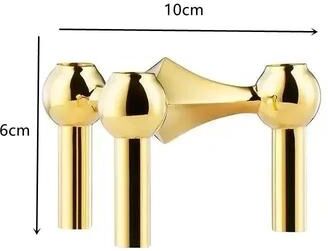
Uplift Essentials Molecular Structure Nordic Candle Holder goldAdd a touch of contemporary elegance to your space with the Molecular Structure Nordic Candle Holder, a stunning fusion of scientific inspiration and minimalist design. This silver candlestick centerpiece features a unique geometric framework that...67,97 $*Shipping: 0,00 $Secure redirect to the provider
-
What are the similarities and differences in the structure of DNA compared to proteins?
Both DNA and proteins are made up of long chains of building blocks. In DNA, the building blocks are nucleotides, while in proteins, they are amino acids. Both DNA and proteins have a primary structure that determines their sequence of building blocks. However, DNA has a double helix structure, while proteins have a more complex three-dimensional structure determined by interactions between amino acids. **
-
Can someone explain the differences between classes, strata, and milieus in social structure to me?
In social structure, classes refer to groups of people who share similar economic positions and opportunities. Strata, on the other hand, are layers or levels within a society that are based on factors such as income, education, and occupation. Milieus are social environments or settings where individuals interact and share common values, lifestyles, and interests. While classes focus on economic factors, strata consider various social indicators, and milieus emphasize cultural and lifestyle aspects within the social structure. **
-
What are the differences between the shell model, the cloud model, and the Lewis structure?
The shell model describes the arrangement of electrons in energy levels or shells around the nucleus of an atom. The cloud model represents electrons as a cloud of negative charge surrounding the nucleus, with no specific orbit or trajectory. Lewis structures, on the other hand, show the arrangement of atoms and valence electrons in a molecule or ion, using dots to represent valence electrons and lines to represent covalent bonds. Each model provides a different perspective on the behavior and structure of atoms and molecules. **
-
What are the differences in the structure of the arm skeleton compared to the leg skeleton?
The arm skeleton, which includes the humerus, radius, and ulna, is generally shorter and more mobile than the leg skeleton, which consists of the femur, tibia, and fibula. The arm bones are designed for greater range of motion and flexibility to facilitate activities like reaching and grasping. In contrast, the leg bones are longer and stronger to support the body's weight and provide stability for activities like walking and running. Additionally, the arm bones have more freedom of movement at the shoulder and elbow joints, while the leg bones are more restricted in their range of motion at the hip and knee joints. **
* All prices are inclusive of VAT and, if applicable, plus shipping costs. The offer information is based on the details provided by the respective shop and is updated through automated processes. Real-time updates do not occur, so deviations can occur in individual cases. ** Note: Parts of this content were created by AI.